
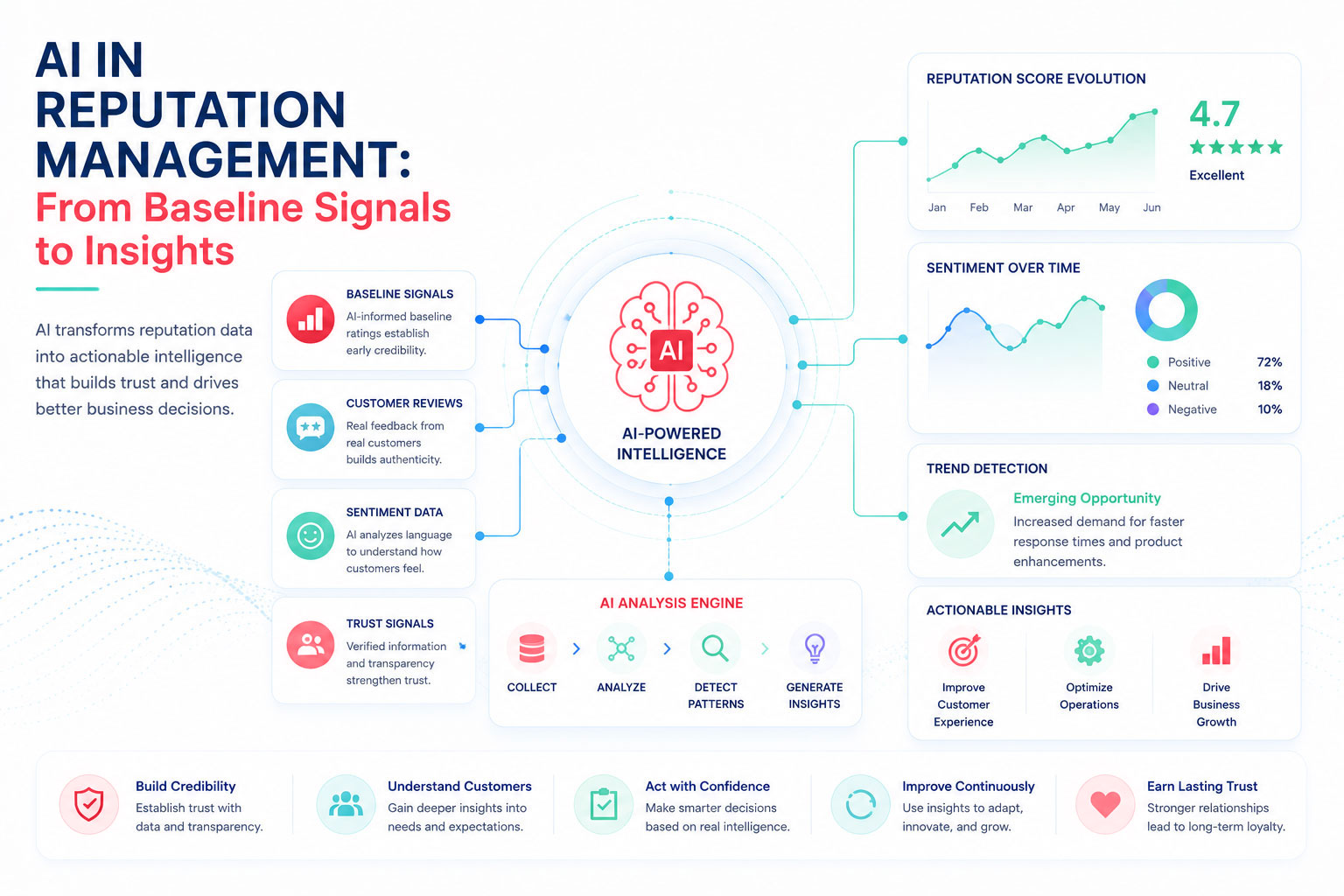
Reputation has always been shaped by customer experiences, public perception, and the trust businesses earn over time. As digital interactions continue to grow, organizations are collecting more feedback than ever before. Reviews, ratings, comments, and customer interactions generate valuable information, but the volume of this data often makes it difficult to interpret effectively.
Artificial intelligence is changing how businesses understand and manage reputation. Rather than simply collecting feedback, modern reputation systems can analyze patterns, identify trends, and generate meaningful insights that support better decision making.
The role of AI in reputation management extends far beyond automation. It helps transform reputation from a static measurement into a dynamic source of intelligence.
The Evolution of Reputation Management
Traditional reputation management focused primarily on monitoring reviews and responding to customer feedback. Businesses would track ratings, address complaints, and attempt to maintain a positive public image.
While these practices remain important, they often provide a limited view of what customers are actually experiencing.
Modern reputation systems require a deeper understanding of customer sentiment, behavioral patterns, emerging concerns, and long-term credibility trends. This is where artificial intelligence provides significant value.
Solving the Early Reputation Challenge
One of the biggest challenges for new businesses is establishing credibility before meaningful customer feedback exists.
Without reviews or ratings, potential customers often face uncertainty when evaluating a business. This lack of information can create hesitation and slow trust development.
AI-informed baseline ratings help address this challenge by providing an initial layer of context before customer reviews are available.
The purpose of a baseline signal is not to replace customer feedback. Instead, it helps reduce uncertainty during the early stages of reputation development.
As authentic customer experiences are collected, the reputation profile evolves naturally and becomes increasingly influenced by real feedback.
Moving Beyond Baseline Ratings
The value of artificial intelligence does not end once customer reviews begin to accumulate.
In fact, this is where AI becomes even more powerful.
As feedback volumes grow, artificial intelligence can help identify meaningful patterns that would be difficult to detect through manual analysis alone.
AI can uncover:
- Emerging customer concerns
- Shifts in sentiment over time
- Recurring service strengths
- Changes in customer expectations
- Opportunities for improvement
These insights help businesses move from reactive reputation management to proactive reputation development.
Understanding Sentiment at Scale
Customer feedback often contains information that extends far beyond ratings.
Reviews may reveal emotions, frustrations, expectations, and experiences that cannot be captured by a numerical score alone.
Artificial intelligence can analyze language patterns across large collections of feedback to identify broader sentiment trends.
This allows organizations to understand not only what customers think, but also why they feel that way.
By understanding sentiment at scale, businesses gain a clearer picture of their reputation and the factors influencing it.
Identifying Reputation Trends
Reputation is not static. Customer expectations evolve, markets change, and businesses continuously adapt.
AI helps organizations track these changes by identifying trends that emerge over time.
Trend analysis can reveal:
- Improving customer satisfaction
- Declining service quality
- Growing demand for specific features
- Shifts in customer priorities
- Patterns across industries and markets
These insights help businesses make informed decisions before minor concerns become larger challenges.
Transforming Feedback Into Actionable Intelligence
Data alone does not create value. Insights become valuable when they influence action.
Organizations that leverage AI effectively can use reputation data to improve products, refine services, strengthen customer experiences, and support strategic planning.
Instead of viewing reviews as isolated pieces of feedback, businesses can understand them as part of a larger intelligence framework.
This shift allows reputation management to contribute directly to growth and innovation.
Maintaining Transparency and Trust
As artificial intelligence becomes more involved in reputation systems, transparency becomes increasingly important.
Customers should understand how AI contributes to reputation analysis and how feedback influences overall credibility.
The most effective reputation platforms combine technological intelligence with clear communication and authentic customer experiences.
Trust is strengthened when users understand the role AI plays and how reputation evolves over time.
The Benefits for Businesses
Businesses that incorporate AI into reputation management gain several advantages:
- Faster identification of customer concerns
- Deeper understanding of customer sentiment
- Improved decision making
- Enhanced reputation monitoring
- Greater operational visibility
- More effective customer experience improvements
These benefits allow organizations to respond more effectively to customer needs while strengthening long-term credibility.
Where Trustaine Fits In
Trustaine combines trusted customer feedback, evolving reputation systems, and AI-powered insights to help businesses better understand and manage credibility.
The platform supports organizations throughout the entire reputation journey, from AI-informed baseline ratings during the earliest stages of growth to advanced insight generation as customer feedback expands.
By transforming reputation data into meaningful intelligence, Trustaine helps businesses make informed decisions while maintaining transparency and trust.
The Future of Intelligent Reputation
The future of reputation management is not simply about collecting more reviews. It is about understanding what those reviews reveal.
Artificial intelligence enables businesses to move beyond surface-level metrics and uncover deeper insights that drive improvement, innovation, and stronger customer relationships.
As reputation systems continue to evolve, organizations that combine trusted feedback with intelligent analysis will be better positioned to earn credibility, adapt to change, and build lasting trust.