
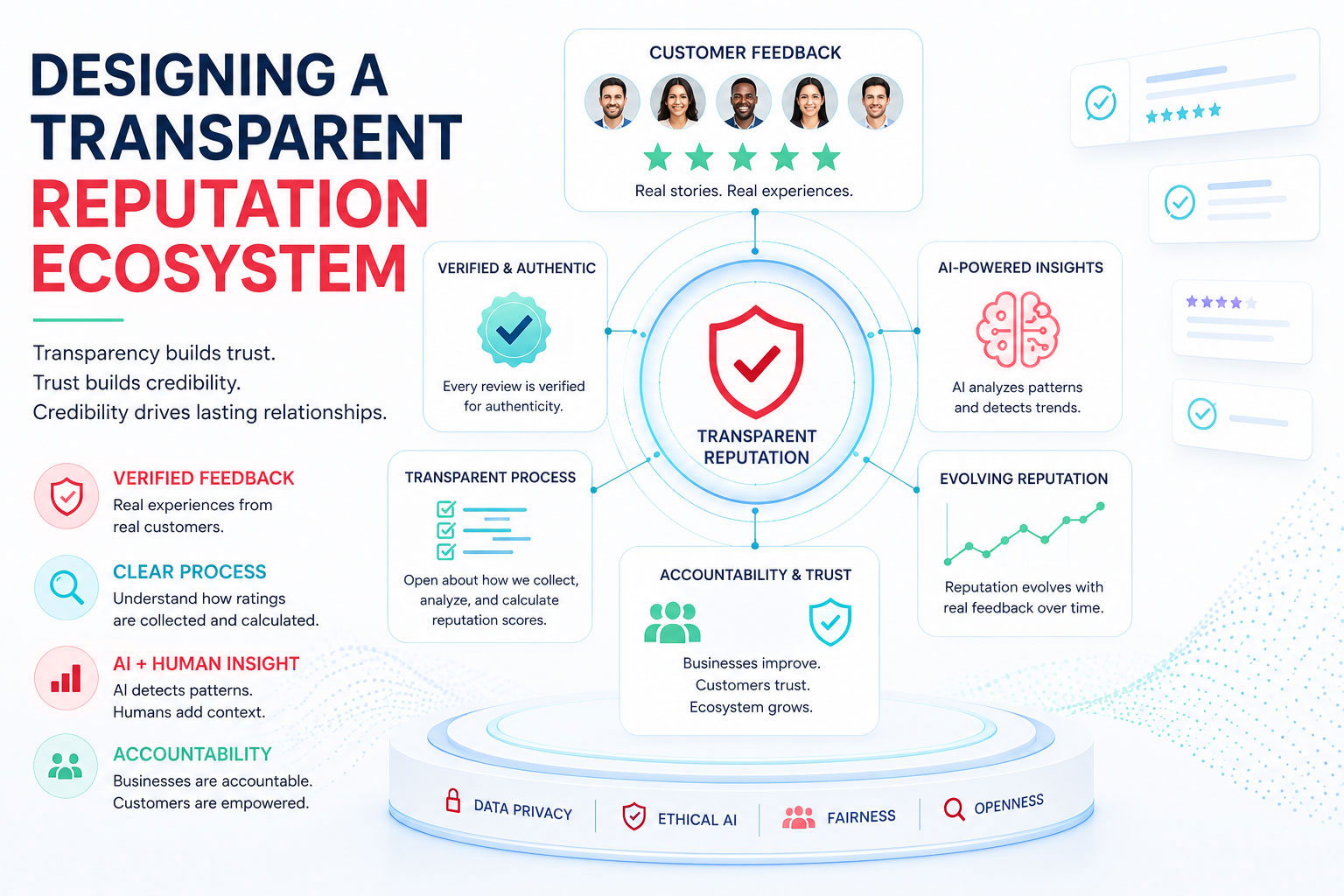
Trust is not built through ratings alone. It emerges from the systems that collect, interpret, and present information about businesses and customer experiences. As consumers become increasingly aware of manipulated reviews, inflated scores, and misleading trust signals, transparency has become one of the most important foundations of digital credibility.
A transparent reputation ecosystem goes beyond displaying customer feedback. It helps people understand how reputation is formed, how credibility evolves, and how trust signals should be interpreted. In a world where confidence is difficult to earn and easy to lose, transparency creates the conditions for meaningful trust.
Why Transparency Has Become Essential
The internet gives consumers access to more information than ever before. Before choosing a product, service, or company, customers often compare ratings, read reviews, and evaluate public reputation.
The challenge is that information alone does not create trust.
When users cannot understand how reputation is calculated or where feedback originates, uncertainty begins to replace confidence. Customers start questioning whether ratings are genuine, whether reviews represent real experiences, and whether businesses are being evaluated fairly.
Transparency solves this problem by making reputation easier to understand. It provides context behind the numbers and allows people to evaluate credibility with greater confidence.
The Limitations of Traditional Review Platforms
Many review platforms focus on displaying scores while offering very little insight into how those scores are produced.
As a result, users often see a rating without understanding:
- How reviews are collected
- How ratings are calculated
- Whether feedback has been verified
- How reputation changes over time
- What factors influence overall credibility
This lack of visibility creates an environment where perception can become disconnected from reality. Even authentic reviews lose value when users cannot evaluate the integrity of the system behind them.
Reputation Is More Than a Score
A reputation score can be useful, but it should never be the entire story.
Credibility is influenced by multiple factors:
- Customer satisfaction
- Consistency of service
- Responsiveness to feedback
- Historical performance
- Patterns within customer sentiment
When reputation is reduced to a single number, valuable context is lost. Transparency helps preserve that context by allowing users to see the factors that contribute to credibility rather than focusing solely on the final score.
The Role of Customer Feedback
Customer feedback remains one of the most important components of any reputation system.
Real experiences provide insights that businesses cannot generate themselves. They help future customers understand what to expect while giving organizations valuable information about their strengths and areas for improvement.
A transparent ecosystem treats customer feedback as more than a collection of opinions. It recognizes feedback as evidence that contributes to a continuously evolving understanding of reputation.
As more experiences are shared, the reputation profile becomes increasingly representative of reality.
The Role of AI in Modern Reputation Systems
Artificial intelligence is becoming an increasingly important part of reputation management. AI can identify trends, analyze sentiment, detect anomalies, and help businesses understand large volumes of feedback more efficiently.
However, transparency requires that AI remains understandable.
Users should know:
- When AI contributes to reputation analysis
- How AI-generated insights are used
- What role AI plays within the ecosystem
- How customer feedback continues to influence outcomes
Transparency ensures that artificial intelligence strengthens credibility rather than creating uncertainty.
Creating Trust During the Early Stages
One of the challenges facing new businesses is the absence of reputation data. Before reviews exist, customers have little information available to help guide decisions.
This creates what many platforms experience as a trust gap.
An AI-informed baseline rating can help provide initial context while a reputation profile begins to develop. However, transparency is critical.
Customers should understand that a baseline rating serves as an early signal rather than a replacement for customer experience.
As reviews accumulate, authentic feedback should become the dominant factor shaping reputation.
This creates a system where trust begins with context and evolves through evidence.
Accountability Through Visibility
Transparency encourages accountability across the entire ecosystem.
Businesses become more motivated to improve because customer experiences directly influence credibility. Customers become more engaged because their feedback contributes to a meaningful reputation system. Platforms become more trustworthy because their processes are visible rather than hidden.
This shared accountability creates healthier relationships between businesses and consumers.
Trust is strengthened when everyone understands how reputation is formed and how credibility evolves.
Benefits for Businesses
Businesses that participate in transparent reputation systems gain more than public visibility.
- Greater customer confidence
- Stronger credibility
- Higher quality feedback
- Better customer insights
- Improved long-term reputation management
Transparency transforms reputation from a marketing asset into a strategic business resource.
Organizations gain a clearer understanding of how customers perceive them and where opportunities for improvement exist.
Benefits for Customers
Customers also benefit from greater transparency.
A reputation ecosystem built on visibility and accountability helps users:
- Evaluate businesses more accurately
- Understand how ratings are formed
- Identify credible trust signals
- Make informed decisions with confidence
Rather than relying on isolated scores, customers gain access to the broader context behind reputation.
Where Trustaine Fits In
Trustaine is built around the belief that credibility should be transparent, measurable, and continuously evolving.
The platform combines trusted customer feedback, AI-informed insights, and clear reputation signals to create an ecosystem that reflects real experiences rather than static perception.
By making reputation easier to understand, Trustaine helps businesses strengthen credibility while helping customers make more informed decisions.
The goal is not simply to display ratings. The goal is to create an environment where trust can be built through visibility, accountability, and evidence.
Building the Future of Credibility
The future of reputation management will not be determined by how many reviews a platform collects. It will be determined by how effectively that platform helps people understand and trust the information being presented.
Transparent reputation ecosystems provide the context, accountability, and clarity required for modern decision making.
As businesses and consumers continue to rely on digital credibility, transparency will become one of the defining characteristics of trustworthy reputation systems.
The organizations that embrace transparency today will be better positioned to earn trust, strengthen relationships, and build reputations that endure.