
Trust has become one of the most valuable assets a business can possess. It influences customer decisions, strengthens brand reputation, and creates the confidence necessary for long-term relationships. Yet despite its importance, trust remains one of the most misunderstood business metrics.
Many organizations attempt to measure trust through a handful of surface-level indicators such as ratings, review counts, or follower numbers. While these metrics can provide useful information, they rarely tell the complete story.
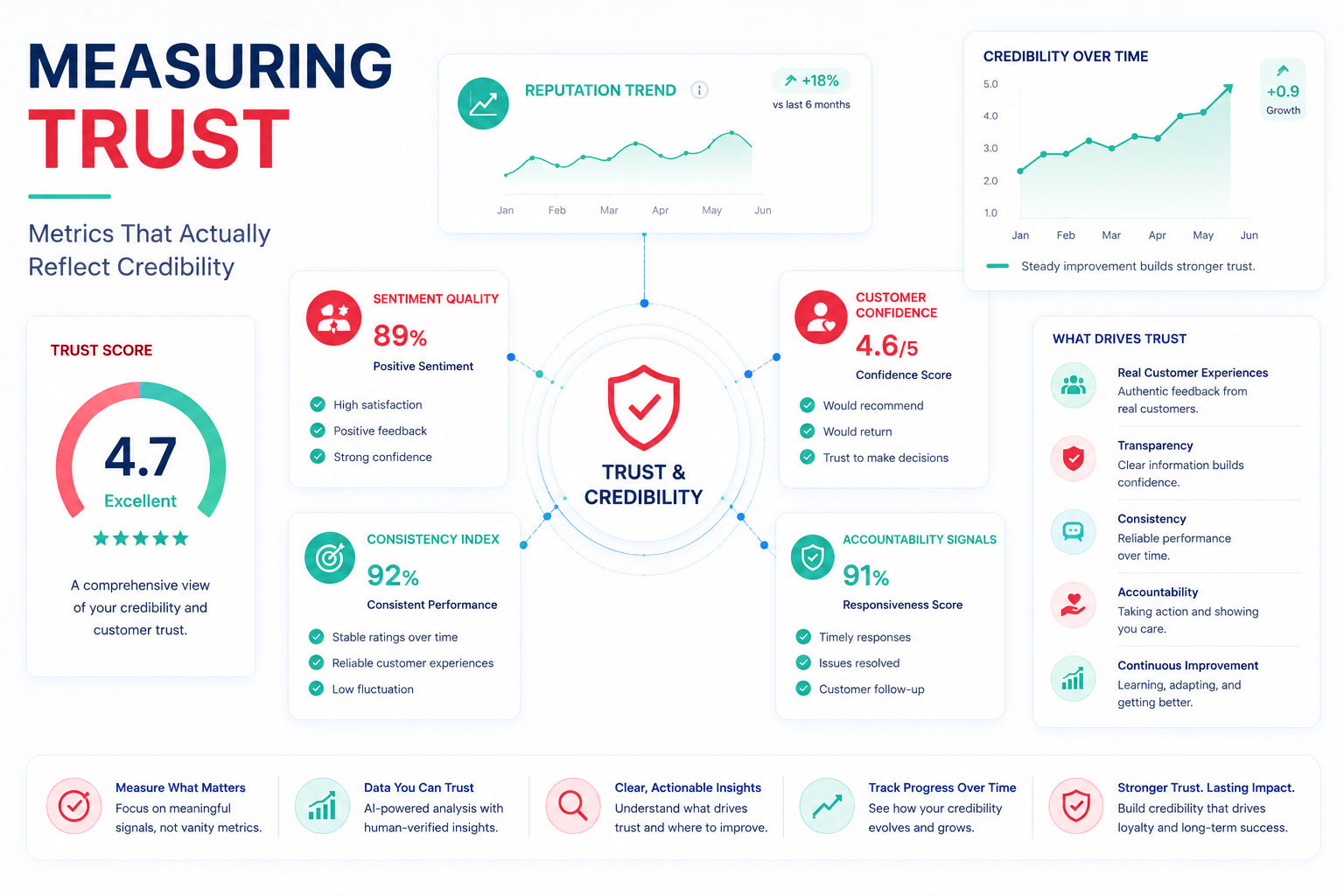
Credibility is more complex than popularity. It is built through consistency, transparency, accountability, and real customer experiences. To understand trust accurately, businesses must look beyond simple scores and focus on metrics that reflect genuine reputation.
Why Trust Is Difficult to Measure
Unlike revenue or website traffic, trust cannot be observed directly. It exists within customer perceptions, expectations, and experiences.
This creates a challenge for businesses attempting to understand how credible they truly are. A high rating may suggest customer satisfaction, but it does not necessarily reveal whether customers feel confident recommending the business, returning in the future, or relying on it when important decisions are involved.
Meaningful trust measurement requires a broader perspective that considers multiple signals rather than a single number.
The Problem with Vanity Metrics
Many reputation indicators appear impressive on the surface but offer limited insight into actual credibility.
Examples include:
- Total review count
- Social media follower numbers
- Page views and impressions
- Temporary engagement spikes
- Raw rating averages without context
These metrics may reflect visibility, but visibility alone does not create trust.
Customers increasingly understand that popularity can be manufactured, engagement can be inflated, and ratings can lack meaningful context. As a result, businesses need more reliable indicators that demonstrate authentic credibility.
Consistency as a Trust Metric
One of the strongest indicators of trustworthiness is consistency.
Customers are more likely to trust organizations that consistently deliver positive experiences over time rather than businesses that fluctuate between exceptional and disappointing performance.
Consistency can be measured through:
- Long-term review trends
- Customer satisfaction stability
- Service reliability
- Ongoing sentiment patterns
- Repeated positive customer experiences
When positive experiences occur consistently, credibility becomes stronger and more sustainable.
The Importance of Reputation Evolution
Reputation should never be viewed as static.
Businesses evolve, customer expectations change, and new experiences continuously influence public perception. A meaningful trust metric should capture this evolution rather than focusing only on historical averages.
Organizations that demonstrate improvement over time often earn greater trust than those that simply maintain existing scores.
Measuring how reputation changes provides valuable insight into a company's ability to learn, adapt, and improve.
Sentiment Quality Matters More Than Volume
Large volumes of feedback can be valuable, but quantity alone does not determine credibility.
The quality of customer sentiment often provides deeper insight into trust.
Businesses should evaluate:
- Depth of customer feedback
- Recurring themes within reviews
- Emotional sentiment patterns
- Evidence of customer confidence
- Customer willingness to recommend
Detailed, thoughtful feedback often reveals more about trust than a simple rating score.
Responsiveness as a Credibility Indicator
Trust is influenced not only by customer experiences but also by how businesses respond to them.
Organizations that acknowledge concerns, answer questions, and engage constructively with feedback demonstrate accountability.
Metrics that reflect responsiveness may include:
- Response rates
- Resolution effectiveness
- Customer follow-up engagement
- Improvement actions resulting from feedback
These indicators reveal whether a business is actively participating in the trust-building process.
The Role of Artificial Intelligence in Trust Measurement
Artificial intelligence is making trust measurement more sophisticated and meaningful.
Rather than focusing exclusively on ratings, AI can identify patterns across large volumes of customer feedback and reputation data.
AI can help measure:
- Sentiment trends
- Reputation momentum
- Emerging customer concerns
- Trust signal strength
- Credibility development over time
This creates a more complete understanding of reputation than traditional metrics alone can provide.
Combining Human Experience with Data
The most reliable trust metrics emerge when customer experiences and analytical insights work together.
Customer feedback provides authenticity. Data analysis provides context. Artificial intelligence uncovers patterns.
Together, these elements create a clearer picture of credibility that reflects both perception and performance.
Trust measurement becomes significantly more valuable when it combines evidence from multiple sources rather than relying on isolated indicators.
Where Trustaine Fits In
Trustaine is built around the idea that trust should be measurable through meaningful signals rather than superficial metrics.
The platform combines trusted customer feedback, evolving reputation profiles, AI-powered analysis, and transparent trust indicators to help businesses understand credibility more effectively.
By focusing on reputation evolution, sentiment quality, customer experiences, and accountability, Trustaine provides a more complete view of trust than traditional rating systems alone.
This allows organizations to monitor credibility, identify opportunities for improvement, and strengthen long-term customer confidence.
Looking Beyond the Numbers
The future of trust measurement will not be defined by a single score.
Businesses and customers alike are seeking deeper understanding, greater transparency, and more meaningful indicators of credibility.
Organizations that focus on consistency, reputation evolution, customer sentiment, and accountability will gain a clearer picture of trust and a stronger foundation for long-term growth.
When credibility is measured through meaningful signals rather than vanity metrics, trust becomes easier to understand, strengthen, and sustain.