
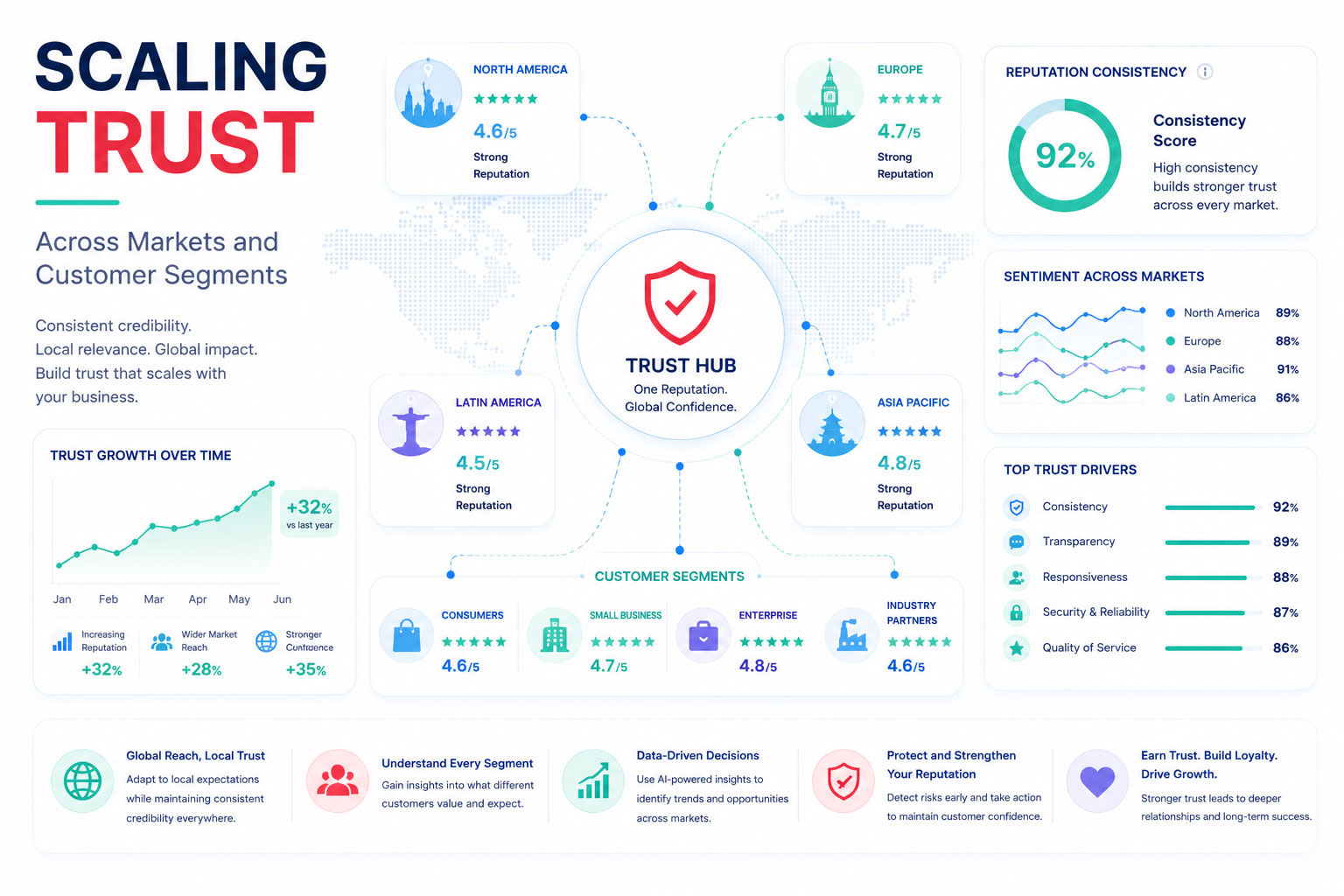
Trust is difficult to earn and easy to lose. For growing businesses, the challenge becomes even greater as operations expand across new markets, industries, and customer segments. What builds credibility with one audience may not have the same impact on another, and maintaining a consistent reputation becomes increasingly complex as scale increases.
As organizations grow, trust can no longer rely solely on personal relationships or localized experiences. It must be supported by systems, processes, and transparent reputation frameworks that can scale alongside the business.
The organizations that successfully scale trust are those that treat credibility as a strategic asset rather than a byproduct of growth.
Why Trust Becomes More Complex at Scale
In the early stages of a business, reputation is often built through direct customer interactions. Founders engage personally with customers, feedback loops are short, and experiences are easier to monitor.
As the business expands, those conditions begin to change.
Organizations may enter new regions, serve different industries, or attract customer groups with unique expectations. Maintaining consistency across these environments becomes significantly more challenging.
Without a structured approach to reputation management, trust can become fragmented, leading to inconsistent customer experiences and reduced confidence.
Different Customers Evaluate Trust Differently
Not all customers look for the same trust signals.
A consumer evaluating a local service provider may prioritize customer reviews and responsiveness. A business decision-maker evaluating a software platform may focus on reliability, security, transparency, and long-term credibility.
Different segments often value:
- Customer reviews and ratings
- Industry expertise
- Service consistency
- Transparency and communication
- Security and compliance
- Reputation within a specific market
Understanding these differences helps organizations build trust in ways that resonate with the audiences they serve.
Consistency Is the Foundation of Scalable Trust
Regardless of market or customer segment, consistency remains one of the strongest indicators of credibility.
Customers expect organizations to deliver reliable experiences regardless of location, channel, or point of interaction.
Consistency can be reflected through:
- Service quality
- Customer support experiences
- Communication standards
- Response times
- Brand values and messaging
When experiences remain consistent across different markets, trust becomes easier to scale and sustain.
The Importance of Local Relevance
While consistency is important, trust also requires relevance.
Customers in different industries and regions often have unique expectations, cultural considerations, and decision-making behaviors.
Organizations that successfully scale trust balance global credibility with local understanding.
This means maintaining a consistent reputation framework while adapting communication, engagement, and customer experiences to the needs of specific audiences.
Using Customer Feedback to Strengthen Trust
Customer feedback becomes increasingly valuable as organizations expand.
Reviews and customer experiences provide direct insight into how different segments perceive the business. They reveal strengths, uncover weaknesses, and help organizations identify opportunities for improvement.
By analyzing feedback across multiple markets, businesses can identify:
- Regional reputation trends
- Differences in customer expectations
- Common trust drivers
- Emerging concerns
- Opportunities for service improvements
These insights help organizations maintain credibility while adapting to growth.
The Role of Artificial Intelligence
As reputation data grows, manually analyzing every review and customer interaction becomes increasingly difficult.
Artificial intelligence helps organizations understand trust at scale by identifying patterns and trends across large volumes of feedback.
AI can help:
- Analyze sentiment across markets
- Detect emerging reputation risks
- Identify customer expectations
- Monitor trust trends over time
- Generate actionable insights
These capabilities allow businesses to make informed decisions while maintaining visibility into evolving customer perceptions.
Building a Unified Reputation Framework
Organizations that scale successfully often develop a unified approach to reputation management.
Rather than treating each market independently, they establish consistent standards that support trust across the entire organization.
A strong reputation framework typically includes:
- Transparent feedback systems
- Clear trust signals
- Consistent customer engagement practices
- Meaningful reputation metrics
- Continuous improvement processes
This structure creates stability while allowing flexibility where needed.
Why Transparency Becomes More Important as You Grow
Growth increases visibility. As businesses expand, more customers evaluate their reputation, compare alternatives, and share experiences publicly.
Transparency becomes essential because it allows customers to understand how credibility is established and maintained.
Organizations that openly communicate, embrace customer feedback, and demonstrate accountability are more likely to maintain trust as they scale.
Transparency helps transform growth from a potential risk into a credibility advantage.
Where Trustaine Fits In
Trustaine is designed to help businesses build and scale trust across diverse markets and customer segments.
By combining trusted customer feedback, AI-powered analysis, transparent reputation systems, and evolving trust signals, the platform helps organizations understand credibility at every stage of growth.
Whether serving local customers, expanding into new industries, or operating across multiple markets, Trustaine provides the tools needed to maintain consistency while adapting to changing expectations.
This approach helps organizations strengthen reputation without sacrificing transparency or authenticity.
Trust as a Scalable Competitive Advantage
As markets become more competitive, trust will continue to influence customer decisions across every industry.
Organizations that invest in credibility, transparency, and meaningful reputation systems will be better positioned to earn confidence and build stronger customer relationships.
Scaling trust is not about reaching more people. It is about maintaining the confidence of those people as your organization grows.
Businesses that successfully achieve this balance will create reputations that remain resilient, credible, and valuable regardless of market size or customer segment.